
Workplaces bring together people with different backgrounds, experiences, beliefs and perspectives every day. With recent data from the Scanlon Foundation showing rising prejudice toward Muslim, Jewish, Hindu and Sikh Australians, employers have an important role to play in setting the standard for respectful and inclusive behaviour at work.
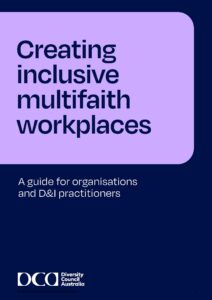 During Inclusion at Work Week 2026, DCA released an updated version of its Creating Inclusive Multifaith Workplaces guide, providing practical, evidence-based strategies to help employers build workplaces where people of all faiths and beliefs can feel respected, connected and valued.
The guide is built around seven levers for good practice on faith inclusion at work, from data collection and leave policies to inclusive events, employee resource groups (ERGs) and responses to discrimination and harassment.
Why does multifaith inclusion matter?
Faith and belief can shape employees’ daily routines, clothing, food choices, leave needs, celebrations, prayer practices and sense of belonging.
DCA’s Inclusion@Work Index has consistently shown employees from non-Christian faiths continue to experience higher levels of exclusion at work. At the same time, Australia has become more religiously diverse, with over 150 unique faith groups identified in the most recent Census data.
When people leaders take a proactive and respectful approach to faith inclusion, they reduce exclusion, support wellbeing, and help people bring their skills and perspectives to the team.
Three ways to use the guide
1. Make end-of-year celebrations more inclusive
As you prepare for end-of-year events and holiday shutdowns, now is an ideal time to review how inclusive your events and celebrations are for employees from different faith backgrounds.
The guide encourages organisations to be mindful of significant cultural and religious dates, use inclusive language in end-of-year communications, and provides advice on how to ensure events are accessible and welcoming for everyone. It also offers guidance on reviewing leave policies and flexible work arrangements so employees can observe religious holidays and commitments that may not align with public holiday calendars.
2. Strengthen employee engagement and voice through ERGs
One of the new additions to the guide is a dedicated section on multifaith-inclusive employee resource groups (ERGs).
ERGs help foster a diverse, inclusive workplace aligned with your organisation’s mission, values, goals, business practices and objectives.
Whether your organisation is considering a faith-based network, an interfaith group, or looking to ensure existing ERGs are welcoming of faith diversity, the guide outlines practical steps to centre employee voice, secure leadership support and avoid over burdening employees.
3. Strengthen your D&I data collection
Another new focus area in the guide is faith diversity data collection. Understanding faith diversity within your workforce can help you identify barriers, better support employees, and make more informed decisions about inclusion initiatives.
For organisations planning their 2027 employee engagement, inclusion or diversity surveys, the guide provides practical advice on collecting faith data in a respectful, voluntary and confidential way. This includes a sample question, guidance on building employee trust, and considerations for analysing and reporting data responsibly.
Find out more and access Creating Inclusive Multifaith Workplaces
DCA members can download the Creating Inclusive Multifaith Workplaces guide via DCA’s website.
Members can also access People Leaders: Creating Multifaith Inclusive Teams, a practical companion resource that helps people leaders reduce exclusion, support wellbeing and help people bring their skills and perspectives to the team.
Non-members can access Creating Multifaith Inclusive Teams, a two-page reference guide to help demonstrate how inclusive work environments can help create multifaith inclusive teams.