
Change at Work: a model for designing and implementing D&I organisational change
This case study is explored within the framework of DCA’s own Change at Work research. This evidence-based approach delivers strategic D&I that sticks, and is based on four switches:
BHP is a world-leading resources company operating in the mining sector — one of the most traditionally male-dominated industries in the world. With a total workforce of over 90,000 people across more than 90 locations, including Australia, Chile, the United States, and Canada, BHP plays a critical role in supplying the resources essential to modern infrastructure and the energy transition. Guided by its purpose — to bring people and resources together to build a better world — BHP is grounded in its values to Do what’s right, Seek better ways, and Make a difference.
In 2016, BHP set an aspirational goal to achieve gender balance across its global employee workforce by the end of CY2025, defined as a minimum 40 per cent women and 40 per cent men in line with the International Labour Organization’s definition. This bold aspiration was driven by a commitment to inclusion and diversity (I&D) and the belief that diverse and inclusive teams make our business stronger — delivering better safety, productivity, and cultural outcomes.
Explore the evidence-based model for designing and implementing D&I organisational change.
In April 2025, BHP became the first global, listed mining company to achieve gender balance across its employee workforce and reached its 40 per cent female representation aspirational goal ahead of schedule.
1. Diagnosing a business need
In 2016, BHP identified a clear need to address gender imbalance across its workforce. The company recognised — informed by emerging research and industry experience — that more gender-balanced teams had the potential to deliver better safety, engagement and productivity outcomes. These beliefs, alongside external factors such as talent shortages and rising expectations around equity and inclusion, helped create a compelling case for change. Over time, BHP’s own data has reinforced this connection, with more diverse teams demonstrating stronger performance and fewer recordable injuries.
At the time, female representation across the industry was only around 16 per cent, with BHP at around 17.6 per cent. BHP analysed its workforce data to understand why more women weren’t looking at BHP (and mining more broadly) as a career option — examining recruitment, attrition, promotion and engagement. The findings were clear: without targeted intervention, progress would be slow, and could take decades.
This prompted a strategic shift. BHP committed to accelerating change through focused, data-driven initiatives. The company also recognised that achieving gender balance would need to go beyond hiring more women — it meant changing systems, leadership behaviours and workplace culture.
2. Designing D&I change that works
To achieve its gender balance aspirational goal, BHP focused on building practical and scalable solutions. At a global level this meant setting clear leadership expectations for respectful and inclusive conduct within business planning and governance processes, to reinforce that inclusion was part of how the business was managed.
Dedicated teams were established to partner with operations across the globe, providing regular workforce insights to inform leadership decision making and identify emerging barriers to participation. BHP refined core people processes such as recruitment, flexible work and roster design to broaden access and participation while maintaining merit-based employment standards. These efforts were also supported by recognising the need for changes in attitudes and behaviours in the workplace, to make it a safer, more inclusive environment for everyone. This included rolling out respectful behaviours’ initiatives, along with active bystander training for employees and contractors to help prevent harassment and discrimination and promote psychological safety.
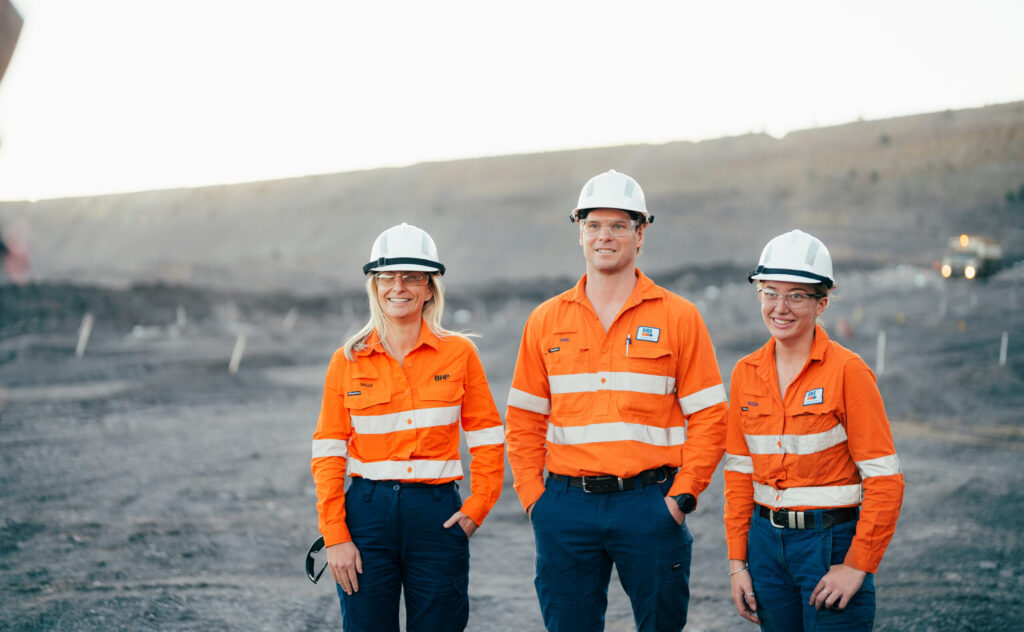
In Australia, BHP set up a regional project management office to lead four strategic focus areas, each backed by leadership support and investment. These included:
- expanding sourcing strategies
- improving internal mobility through a talent marketplace
- building leadership capability via coaching
- increasing access to flexible work
- creating new entry-level pathways through the Future Fit Academy — BHP’s dedicated training program that provides practical, accredited learning to prepare people with the skills needed for operational roles in the resources industry.
Each initiative was chosen based on evidence of what works and organisational readiness, with clear goals and governance in place to track progress and ensure accountability.
In the Americas, BHP achieved gender balance in FY2024, ahead of target. A range of initiatives supported progress, including designing sites, facilities and equipment to be more inclusive of all genders, investing in entry-level programs for communities near Escondida and Spence, and implementing strong retention and promotion plans for women. The region also celebrated key milestones, such as appointing the first female general manager at site.
3. Engaging & enabling staff to lead change
The road to achieving gender balance was certainly not linear — the company learned a lot along the way.
One standout learning was that building understanding and belief in the ‘why’ takes time. While BHP knew the aspiration to achieve gender balance would be challenging, it still underestimated how long it would take for people, both internally and externally, to fully understand and trust why the goal mattered.
BHP’s progress was driven by actively engaging its workforce and mobilising leaders to lead the change.
- Launch – establishing the ‘why’ and shared ambition: Rather than positioning gender balance as a process or program, BHP launched the aspirational goal as a statement of intent about the organisation it aspired to be. The company communicated its aspirational goal and vision through a range of channels — including CEO messages, town halls, internal articles, and leader toolkits — with a deliberate focus on building understanding and belief in why gender balance mattered to safety, performance and culture, consistently reinforcing the business case for gender balance and the role every employee plays in building an inclusive culture.
- Conviction and sustained investment from the top: CEO‑level sponsorship, which was passed on from one CEO to the next, ensured inclusion and diversity remained a clear strategic priority, consistently backed with resources, investment, visibility, and long‑term commitment.
- Leader accountability and advocacy: Senior leaders consistently “walked the talk”, role modelling inclusive behaviours and embedding inclusion and diversity into operational priorities. Their visible commitment helped build trust and momentum, ensuring no one was left behind. This was strengthened through targeted development such as leadership masterclasses, one-on-one coaching, and mentoring programs designed for women and other diverse groups. Guest speakers supported open dialogue and facilitated conversations with leaders, which helped build empathy, challenge assumptions and sustain engagement across the organisation. Leaders also participated in Active Bystander training and used comprehensive harassment, discrimination and trauma-informed management processes to reinforce psychological safety and uphold consistent standards of behaviour.
- Gender equity networks: These employee-led groups created a safe space for team members to share experiences, identify barriers and co-design solutions.
- Data driven: BHP tracked success through continuous, data-driven evaluation. Performance reviews with the CEO and real-time PowerBI dashboards monitored hiring ratios, turnover, and engagement, enabling quick action when needed. For example, across Australia, every site had its own gap closure strategy, with inclusion and diversity metrics embedded in operational scorecards and cascaded to all levels of leadership.
4. Embedding & evaluating change
To embed lasting change, BHP integrated inclusion and diversity initiatives into core business systems, policies, and processes.
Recruitment
Job advertisements were rewritten using gender-neutral language, diverse interview panels became standard, and recruitment platforms were updated to support inclusive hiring.
Flexible work
In addition, flexible work policies were redesigned with working parents in mind. In regional operational settings, BHP supported community‑led childcare solutions and family‑friendly flexible work arrangements, enabling parents with non‑standard or shift‑based hours to continue working and sustain their careers.
Redesigning work and workplaces
Creating work and workplaces to create a more inclusive and safer physical environment has been a sustained priority for BHP. In FY2025, this included region and site-specific redesigns to better accommodate a diverse workforce, with adjustments to machinery, tools and standardising ways of working to suit different capabilities. Uniforms were updated to offer greater comfort, fit and functionality for women working in operational roles. In Australia, flexible work was expanded, with 92 new job share arrangements introduced, surpassing the target of 61. These changes challenged traditional norms and made operational roles more accessible to a broader range of candidates, reinforcing a sense of belonging and inclusion.
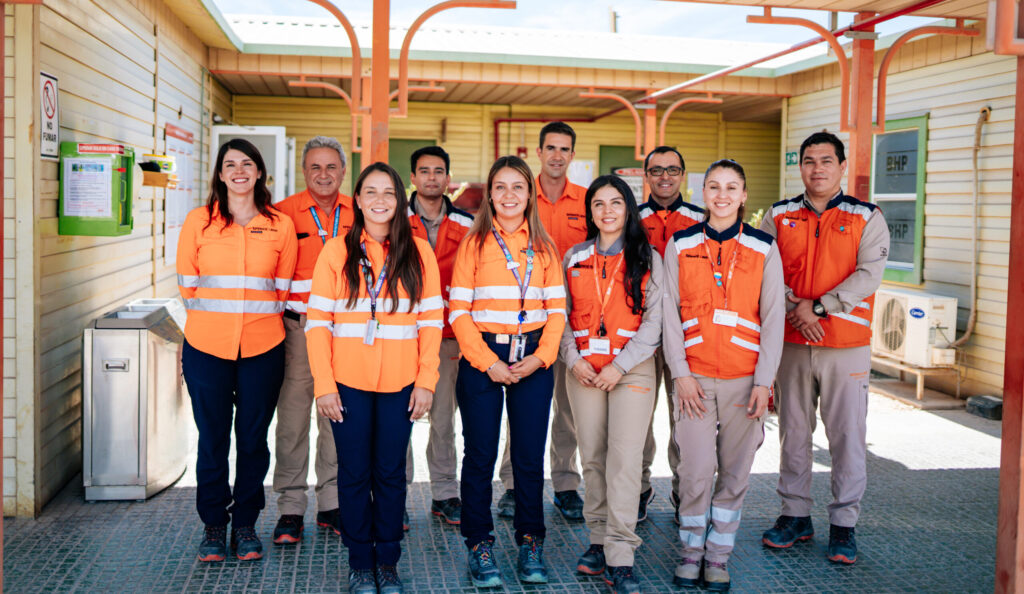
Talent pathways
New programs and pathways were embedded into talent systems and processes. The Future Fit Academy and entry pathways helped enable over 500 women to enter training roles, many of whom transitioned into permanent positions. The Talent Marketplace supported internal mobility, with more than 500 employees participating in career conversations, resulting in 62 women placed in new roles and a retention rate above 95 per cent. The Alumni Program reconnected with 143 former female employees, exceeding targets and reinforcing BHP’s long-term commitment to inclusion.
Key performance indicators (KPIs)
Inclusion and diversity measures were incorporated into leaders’ annual performance objectives and reviewed regularly by senior leadership. Workforce data was monitored at frequent intervals to identify trends, gaps and areas requiring focus, with site‑level performance boards supporting local visibility and informed decision‑making. This governance approach reinforced that inclusion and diversity was embedded within core business management processes, rather than treated as a standalone initiative.
Tracking progress
The senior levels of the organisation cascaded metrics through to performance dashboards across all teams, keeping diversity goals at the front and centre for the entire business. Global teams also enabled active sharing of insights, challenges and practices across regions.
In FY2025, BHP saw significant global progress across key metrics:
- Representation of women increased by 4.2 percentage points compared to FY2024.
- By the end of this year, BHP employed 12,400 more women than in FY2016.
- Female representation in leadership roles increased by 4.8 percentage points compared to FY2024.
- As of 30 June 2025, 36.5% of people leaders and 41.3% of senior executives were women.
In Australia, BHP’s regional performance across its operational sites also improved year on year:
- Representation of women increased by 4.9%.
- Representation of women in Leadership increased by 5.1%.
- Average hiring ratio for women improved by 17.9%.
- Average voluntary turnover of women decreased by 4%.
- Workforce perception scores also improved: Engagement +3%, Enablement +1% and Safety +2%.
In the Americas, BHP also saw meaningful progress in FY2025:
- Female representation increased from 9.0% in FY16 to 45.2% by April 2025.
- Representation passed 40% in December 2023, rising from 36.1% in FY23 to 40.4%.
- Representation reached 41.3% at the end of FY24, followed by a further +3.9 percentage‑point uplift into FY25.
Beyond the numbers, BHP saw a cultural shift. Teams became more respectful and collaborative, with a 21 per cent uplift in “sense of pride” measures. Safety outcomes improved, absenteeism dropped, and decision-making became more inclusive.
The impact has extended beyond BHP. Some contractors have begun adopting similar entry programs, and BHP’s publicly visible aspirational goal influenced peers across the industry. Community and sporting partnerships, including AFLW, the Queensland Firebirds and the Queensland Academy of Sport, helped build new talent pipelines and drive broader industry change.
Achieving global gender balance in April 2025 was a major milestone, and it marks the beginning of a new chapter for BHP. Gender balance is now recognised as a competitive advantage, helping the company navigate a constrained talent market and bringing fresh ideas and perspectives to the table. Looking ahead, BHP is focused on sustaining and evolving these gains by fostering a consistently inclusive and respectful environment for all employees.
Change at Work research and resources
- Evidence-based model for designing and implementing D&I organisational change
- Full research report and synopsis
- A helpful checklist for applying the model
- An easy-to-share 2-page infographic
Upcoming event: BHP on building a gender-balanced employee workforce
15 June 2025 | 12:30 – 1:30pm AEST | Online
Don’t miss this opportunity to join DCA CEO Catherine Hunter in conversation with Michelle Kam, Vice President Talent and Performance at BHP, to discuss their journey and achievements.