The Power of Inclusion: Preventing Workplace Sexual Harassment
This research shows that inclusion is an important factor in reducing the risk of workplace sexual harassment and building safer, more respectful workplaces.
Drawing on our 2025–2026 Inclusion@Work Index survey data — a nationally representative survey of 3,000 workers — we explored the link between inclusion and sexual harassment.
We found:
a clear link between inclusion and lower rates of sexual harassment
inclusive teams, managers, and organisations are all significant protective factors in preventing sexual harassment.
Promoting inclusion can help prevent sexual harassment. We explored which inclusion experiences are associated with lower rates of sexual harassment. The report outlines these experiences, and the actions workplaces can take to make progress on prevention.
Inclusion is a safety issue. Employers should consider how promoting inclusion can help fulfil workplace health and safety obligations.
Preventing sexual harassment is about people, not just policy. Everyone plays a role in creating inclusion, and there are many everyday actions we can take to do this.
Visit our Inclusion@Work Index Hub to read more insights from our Inclusion@Work Index series, including the 2025-2026 Index findings and Index Insights: Sexual harassment at work.
Results at a glance
Inclusion reduces the risk of sexual harassment
Our Inclusion@Work Index survey has shown us how important inclusion is:
Workers in inclusive teams were 3 times less likely to experience sexual harassment than those in non-inclusive teams (37% compared with 12%).
Those with inclusive managers were 2.5 times less likely to experience sexual harassment (26% compared with 10%).
Workers in inclusive organisational climates were 2 times less likely to experience sexual harassment (28% compared with 13%).
Inclusion makes a difference, even in high-risk workplaces
Some workplaces have a higher risk of sexual harassment based on factors such as gender imbalance, customer‑facing roles, contracted roles, or a lack of diversity or accountability. Even in these workplaces, inclusion has an impact:
45% of workers in non‑inclusive teams experienced harassment, compared with 25% in inclusive teams.
38% of workers with non-inclusive managers experienced sexual harassment, compared with 20% of workers with inclusive managers.
Exclusionary behaviours drive risk
Sexual harassment is more likely where other exclusionary behaviours occur:
Workers who experienced discrimination were 6 times more likely to also experience sexual harassment (54% compared with 8%)
Everyday exclusion, such as being stereotyped, ignored or left out of social activities, was strongly connected with an increased risk of harassment.
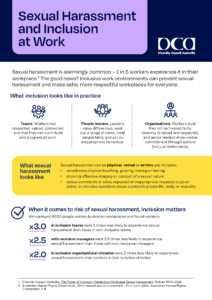
Resource: Sexual Harassment and Inclusion at Work
Download this two page, quick reference document to share with your employees to help demonstrate how inclusive work environments can prevent sexual harassment and make safer, more respectful workplaces for everyone.
This resource shows:
What sexual harassment looks like
Why inclusion matters in preventing sexual harassment
What we can all do to create workplaces that are inclusive, respectable, and safe for everyone
Sexual harassment has been unlawful in Australian for well over three decades and employers have invested in policies, awareness-raising, and training to help prevent it. Despite these efforts, it remains as prevalent as ever occurring in every industry, every location and at every level in workplaces.
DCA’s knowledge programs are facilitated sessions aimed at increasing participants knowledge, skills and awareness of a range of diversity and inclusion topics. Two separate programs, one for all employees and one specific for those in leadership positions, explore the links between building inclusive workplaces and reducing the prevalence of sexual harassment.