
Australian workplaces are not insulated from the world around them. Global conflict, migration, rising faith‑based discrimination, social polarisation, and misinformation increasingly shape the realities that employees bring into the workplace each day. At the same time, Australian organisations are increasingly more culturally and religiously diverse than ever before. These realities place a new and urgent demand on leaders: the ability to work effectively, fairly, safely and respectfully across cultural and faith difference.
This is where cultural intelligence becomes essential.
Cultural intelligence is not simply about having an awareness of difference or celebrating diversity. It is the capability to relate to, and work effectively in culturally diverse situations, particularly when values, communication styles, beliefs, and lived experiences differ widely. In a globalised world and workforce, cultural intelligence is no longer optional, but rather it is a core leadership capability that underpins inclusion, psychological safety, performance, wellbeing, engagement and trust.
From diversity to inclusion: cultural intelligence is the missing link
If diversity refers to the mix of identities – including culture, ethnicity and religion – in a workplace, then inclusion is what happens when that diversity is respected, feels connected, able to contribute, and progress. Cultural intelligence is what enables leaders to bridge the two.
Without cultural intelligence, workplaces risk amplifying misunderstanding, conflict, and exclusion. With cultural intelligence, cultural and faith differences become sources of insight, innovation, and connection.
Culturally intelligent leaders are better equipped to:
- recognise how bias, privilege, and cultural norms shape engagement and decision‑making
- communicate effectively across diverse cultural contexts
- understand cultural adaptation and create culturally and psychological safe environments for workers
- manage conflict that arises from cultural misunderstanding rather than intent, and
- support faith‑based needs in ways that are lawful, respectful, and balanced.
Importantly, cultural intelligence acknowledges that leaders do not need to be experts in every culture or faith. Instead, they need the confidence, flexibility, curiosity, and ability to learn, ask, listen, adapt, and respond constructively when difference shows up.
The case for cultural intelligence
The case for cultural intelligence is clear across three key domains.
For people: Culturally intelligent workplaces are associated with better wellbeing, higher psychological safety, and greater engagement. Employees who feel respected and included are more likely to contribute fully and remain with their organisation.
For organisations: Cultural intelligence supports productivity, innovation, effective collaboration, and risk management. It reduces the likelihood of discrimination, harassment, and conflict escalating – supporting positive duty obligations, risk management and regulatory compliance.
For markets and communities: Culturally intelligent organisations build trust with diverse customers, stakeholders, and partners. In a global and culturally diverse society, this capability is central to reputation, service quality, and long‑term sustainability.
Cultural intelligence as inclusive leadership in practice
Building inclusive leadership capability is a key component of building cultural intelligence competency. DCA research identifies five key leadership mindsets that support inclusion: being identity‑aware, relational, open and curious, flexible and agile, and growth‑focused.
An identity‑aware leader understands how their own identity, culture, experiences and social position shape how they see the world, and how this influences power and opportunity at work.
A relational leader builds trust and belonging across difference, recognising that connection looks different in different cultural contexts.
Open and curious leaders ask rather than assume.
Flexible and agile leaders adapt practices to meet diverse needs without relying on rigid “one size fits all” approaches.
Growth‑focused leaders challenge accepted norms and continuously build their capability, and their team’s capabilities.
Together, these inclusive leadership capabilities enable leaders to move beyond compliance or accommodation, toward actively inclusive and culturally safe team environments.
The reality of multicultural and multifaith workplaces
Research consistently shows that many employees continue to experience exclusion in the workplace. Our Inclusion@Work Index 2025-2026 tells us that 1 in 4 workers experience discrimination and or harassment in the workplace1. In addition, 35.2% of workers from non English speaking backgrounds faced discrimination and/or harassment in the workplace. This is reflected in broader society. The Mapping Social Cohesion2 report states that immigrants from Asian and African countries, such as Iraq and Sudan, and people of Muslim faith are viewed negatively across Australian community.
While most workers, i.e. 3 in 43, support diversity and inclusion efforts, gaps persist. Inclusion is experienced least consistently through day‑to‑day leadership interactions, even though managers play the most direct role in shaping team culture. Only 35% of workers say their manager is inclusive – a figure which has been stagnant since 2019, in comparison to 56% of workers who reported their team is inclusive, and 59% who said their organisation is inclusive.
For people from multicultural and multifaith backgrounds, this gap often translates into real harm: being ignored, having assumptions made about their competence, being excluded from informal systems, or feeling unable to express or practise elements of their culture or faith safely at work. These experiences erode trust, wellbeing, and engagement and they compound in environments where cultural difference is poorly understood.
Culture, faith, and identity shape how people experience work in ways that are both visible and invisible. Language, food, dress, prayer practices, communication styles and holidays may sit “above the surface”, but deeper values – such as ideas of respect, authority, family, or belonging – often remain unseen unless leaders are attuned to them.
Culturally intelligent recognise that equality does not always mean sameness, and that inclusion sometimes requires flexibility, reasonable adjustments and moving beyond good intentions to capable action.
Cultural intelligence is a practice, not a personality trait
Finally, cultural intelligence is not a destination. It is learned, developed, and strengthened over time through reflection, feedback, and deliberate practice. It involves becoming comfortable with ambiguity, recognising the limits of one’s knowledge, and staying open to being challenged. Leaders who are culturally intelligent create workplaces where people do not have to leave parts of themselves at the door to belong. And that is not just good for inclusion – it is essential for the future of work.
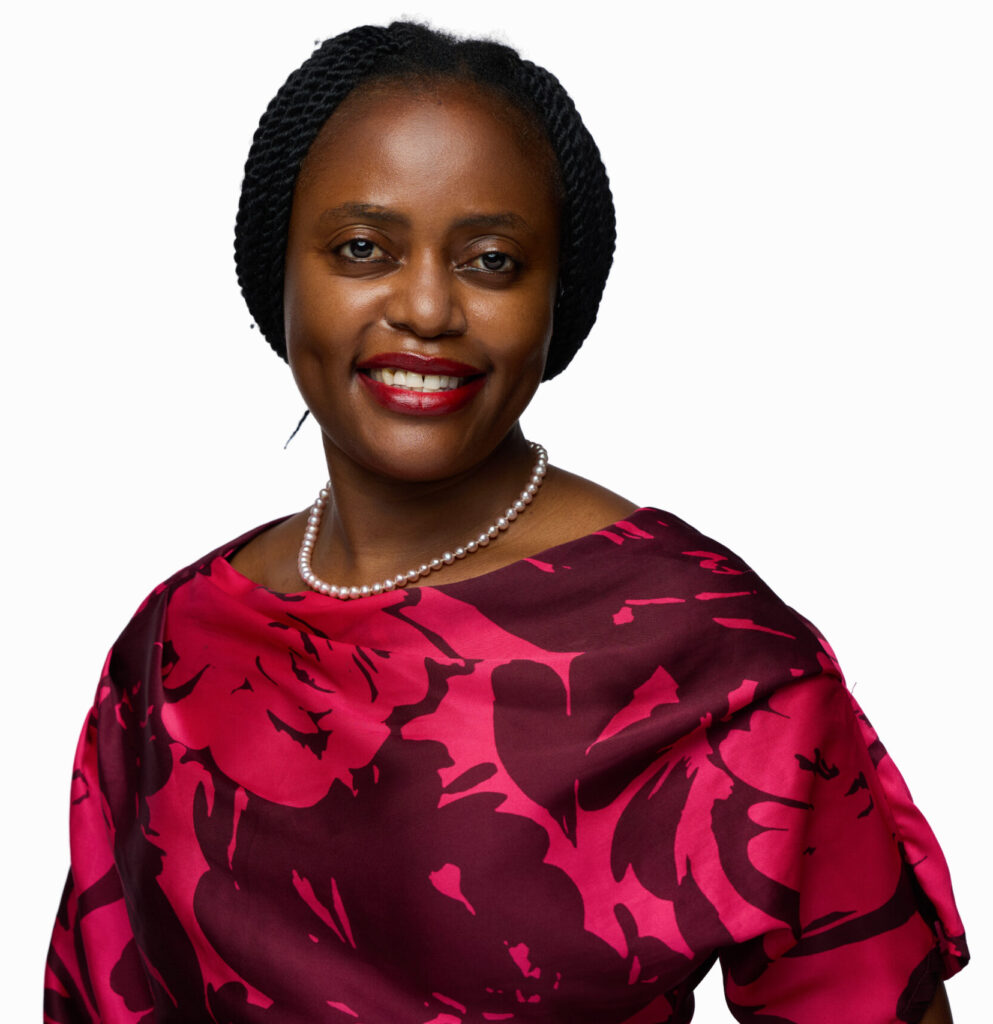
As DCA’s Head of Education, Phoebe Mwanza is responsible for executing DCA’s learning offerings and delivering tools and resources to build the D&I capability of our members.
Phoebe is a diversity and inclusion expert and former human rights and anti-discrimination lawyer, having worked across the public, private and not for profit sector.
As a human rights lawyer, she delivered national programs such as the National Human Rights Action Plan and the National Anti-Racism Strategy. Over the years she has executed organisation-wide diversity and inclusion strategies, inclusive leadership coaching, capability building programs, organisation cultural transformation initiatives and measurement and evaluation frameworks.
Phoebe has worked with organisations such as the Office of the UN High Commissioner for Human Rights, Amnesty International, the Victorian Equal Opportunity and Human Rights Commission and the Attorney General’s Department. Phoebe was appointed as a member of the Queensland Parliament Human Rights Advisory Panel in 2020 and as a member of the Victorian Multicultural Commission’s Regional Advisory Council between 2019-2021.
- Diversity Council Australia (R D’Almada-Remedios, E Tynan and D Wu), Inclusion@Work Index 2025–2026, DCA, Sydney, 2026, page 23
- O’Donnell, James, Alice Falkiner and Katarzyna Szachna. Mapping Social Cohesion 2025. Scanlon Foundation Research Institute, 2025. https://scanloninstitute.org.au/mapping-socialcohesion-2025, pages 13-14
- According to the Inclusion@Work Index 2025–2026: 3 in 4 (76%) workers supported or strongly supported their organisation taking action to create a workplace that is diverse and inclusive.